Required prior to assessment booking

If you have spent your life feeling like you are capable of so much more than you can consistently achieve, we understand the quiet exhaustion that comes with that gap. Living with ADHD often means navigating a world built for a very different kind of focus. It is not a matter of willpower or discipline; it is a biological reality of how your brain processes interest, reward, and regulation. At So You Need Therapy, we don't look at ADHD as something to be "corrected," but as a unique system that requires its own specific set of tools and environments to thrive.


Most of the world operates on an "importance-based" system—doing things because they are necessary or expected. However, the ADHD brain operates on an "interest-based" system. It thrives on novelty, challenge, urgency, and genuine passion. When those elements are missing, the brain can feel like it has "gone offline," making even simple tasks feel physically painful to start. Our work together is about understanding your brain’s specific "operating manual" so you can stop fighting against your biology and start working with it.
These experiences are the markers of a brain that is highly sensitive to stimulation. Recognizing them helps move the conversation away from "failure" and toward a more accurate understanding of your needs:

You may find yourself stuck in "analysis paralysis," wanting to start a task but feeling an invisible barrier that prevents the first step—often leading to a cycle of guilt and procrastination.

While you may struggle to focus on mundane tasks, you likely have the ability to become deeply immersed in topics that fascinate you, losing track of time and the world around you for hours.

You might find that information "evaporates" the moment you are distracted. This isn't forgetfulness; it is a system that prioritizes new, high-stimulation data over routine details.

Emotions can feel sudden and intense. Because the ADHD brain prioritizes seeking stimulation, a small frustration can feel like a major setback, and a small success can feel like a massive win.
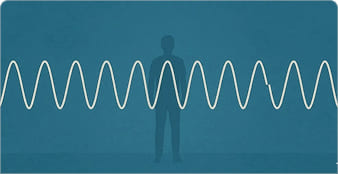
Even when your body is still, your mind may feel like a motor that never shuts off, jumping from one idea to the next in a way that is both creative and exhausting.

You likely experience the world with heightened intensity, where background noises, certain textures, or bright lights feel impossible to ignore. This isn't just a preference; it is your physiology signaling that your environment is overwhelming your internal capacity for regulation.
ADHD rarely travels alone. We help you distinguish between the "noise" of ADHD and other processing styles so we can provide the most effective support.
| Looking at... | ADHD | Autism (ASD) | Complex Trauma (C-PTSD) |
|---|---|---|---|
| The Moment | A sudden burst of restlessness or "zoning out" because a situation is under-stimulating. | A "shutdown" because sensory demands or social "rules" have become too high. | A sudden "freeze" or fogginess because a situation triggered a sense of being unsafe. |
| Primary Goal | To find engagement and dopamine so the brain can stay focused and "online." | To find predictability and sensory safety so the nervous system can rest. | To find internal safety so the body can stop its survival response. |
| Routine | Routine can feel "stifling" or boring, leading to a search for change. | Routine is a vital source of comfort and safety, providing a clear map for the day. | Routine is helpful for safety, but may be disrupted by sudden triggers. |
| Attention Style | Diffuse and intense. You see everything at once and struggle to filter out background noise. | Deep and systemic. You see intricate details and patterns that others often overlook. | Scanning and vigilant. Your attention is focused on looking for threats or mood changes. |
We don't believe in "fixing" your brain. We believe in building a life that accommodates it.

We work on practical, external "scaffolding"—systems for time, organization, and task management that work for your brain, not a neurotypical one.

Years of being told to "just try harder" can lead to deep self-doubt. We work to dismantle that narrative and replace it with a clear-eyed understanding of your strengths.

We help you recognize the physical signs of under-stimulation or "ADHD burnout" before they lead to a crisis, teaching you how to regulate your energy levels.

Our Nurse Practitioners can discuss how various biological supports might help quiet the internal noise, making it easier for therapy and coaching to take root.
Yes. Many adults learned to compensate for years until the demands of adulthood finally exceeded their ability to cope.
Not at all. For many adults, the hyperactivity is entirely internal—a mind that won't stop racing. The "Inattentive" type is often characterized by fogginess and internal distraction.
The goal is never to change who you are. When biological supports are used correctly, people often report feeling "more like themselves"—calmer, more focused, and better able to engage.
A diagnosis is more than a label — it’s a way to understand how your brain works. Our assessments follow CADDRA guidelines and focus on understanding you as a whole person.
Learn About Assessment
Medication support is not one-size-fits-all. Our Nurse Practitioners work with you over time, providing integrated support for ADHD alongside co-occurring anxiety or depression.
Find a Therapist
ADHD-informed therapy offers a space to understand your experiences, support nervous system regulation, and find practical approaches that fit your life.
Learn About TherapyFill in the form and select the service you are looking for and we will email you all the details.
Take our free, 2-minute ADHD screener to get personalized next steps.